
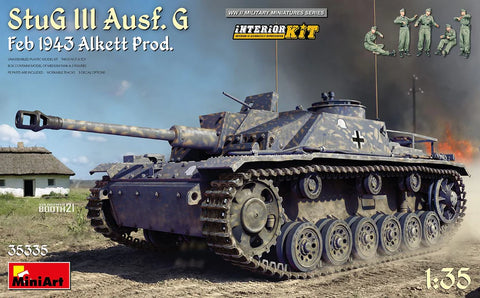
Do you want to get started in plastic model making, or is your child interested in trying it? Building models is one of the most rewarding hobbies and, in our opinion, the best. No other hobby allows you to recreate scale models of real (or fictional) objects with such detail. However, getting your first model can be daunting. With the sheer number of items available for purchase, trying to figure out what to buy can be overwhelming. In this article, we'll guide you from your first visit to a model shop to the completion of your build, when you're ready for another kit.
How do I know where to start?
A good first step is to go to a model shop (or, if you don't have one nearby, take a look at the model section (from our online store). The best way to start is to first determine what object you want to build. Next, you should determine what skill level is most suitable for you. Finally, choose the scale (size) of the kit and, lastly, the kit itself.
The available building themes are endless. If you like military-style kits, check out the sections on aeromodelling, naval model making either armored vehicle modeling (tanks) from Lostbunker. If you like cars, check out the model kit section of cars and trucks. If you want to build figures, go to the section on figure models, where you can choose between military or civilian figures.
Also consider the size of the models. Most models are classified by "scale," which is the size of the model relative to the real object. For example, a 1/24 scale model car will be 1/24 the size of a real car. So, if the real-life Ford Mustang is 480 centimeters long, the 1/24 scale kit will be about 20 centimeters long. The same applies to military kits. The smaller the number in the scale, the larger the kit (relative to the item). So, a 1/24 scale A-10A/C Thunderbolt II aircraft will be larger than a 1/72 scale A-10A/C Thunderbolt II. Be aware of the size of the model you're looking at. When all else fails, Google the size of the real-life vehicle and divide it by the scale.
Once you've determined which category is the best, you can sort through the piles of kits and pick one that interests you.
Which kit level do I want to buy?
Within each topic in the modeling section, you can narrow your search based on other parameters such as skill level and size. If you're buying a first modeling kit for a child, you'll probably want to start with a quick-build kit.
As a general rule, a model kit will always require glue and paint, unless otherwise stated on the box. Skill levels in model making vary depending on the number of parts and the difficulty of assembly. Make sure you feel comfortable at a given level before attempting to move on to the next. If you try to build a model beyond your skill level, you will likely become frustrated and annoyed. Model making is fun, but be sure to get the right kit to fully enjoy the experience.
I've already chosen my kit, what else do I need to buy?
Depending on the type of kit you purchased, you will most likely need some tools, materials, and paints.All kits, from the simplest to the most advanced, require a knife and pliers.
If you buy a glue kit, you'll need plastic glue, paint, and brushes. If you're just starting out in model making, don't buy too much. Buy basic glue, a few bottles of paint (or even a pre-packaged paint set, if the colors match what you're building), and only the tools absolutely necessary to assemble the kit. Don't worry about the kit looking professional; use your first kits as a learning process that will help you better understand the skills and techniques needed to complete a build. As you progress, there will be dozens of useful tools and supplies you'll want to buy: masking tape, modeling putty, sandpaper/files, tweezers, and so on.
Most model kits specify the required paint colors, either on the box or in the instructions. Remember that when you're starting out, you don't need to spend a fortune on tools. Begin with the bare minimum needed to assemble a kit. If you truly enjoy this hobby, you'll gradually expand your tool and workbench collection over time.
If you'd like to get started in model building and plastic modeling, give us a call. We'd be happy to guide you through the process and make sure you get the right kit. You can also send us a message or call us during office hours at +34601623600
3 comments
Imelda
Hello Sir / Mdm,
My name is Imelda, I am a salesperson at KSL WOOD.
We produce Plywood, Timber, Veneer, Block Board, Bare Core, Door Core, OSB, MDF , and other products from wood. We have a huge experience in production of high-quality materials and can offer very competitive conditions.
We are also in the market for balsa wood. We process balsa wood into sheets, sticks and blocks as in many specifications as per customer’s request.
So if you have any requirements, we would be glad to start cooperation. Moreover, we can provide a lot of other wooden products and shipment to all required ports.
Thank you in advance,
I am looking forward to your reply.
Best Regards,
Imelda M Liauw.
International Sales and Marketing Department,
PT.KSL WOOD,
Jl. Raya Sumbersuko No.75 – East Java,
67316, Indonesia,
+6282141998440,
www.kslwood.com
Luis
Estoy empezando y me gustaría saber tiendas económicas de maquetas navales plásticas,muchas gracias y un saludo desde gipuzkoa
Jose guardiola
Estafenomenalque se haya publicado esto haber si la gente se anima más con las maquetas es un mundo fantástico.lo malo es que faltan más tiendas por ejemplo en Barcelona hay 3, contadas así no puede haber afición.